
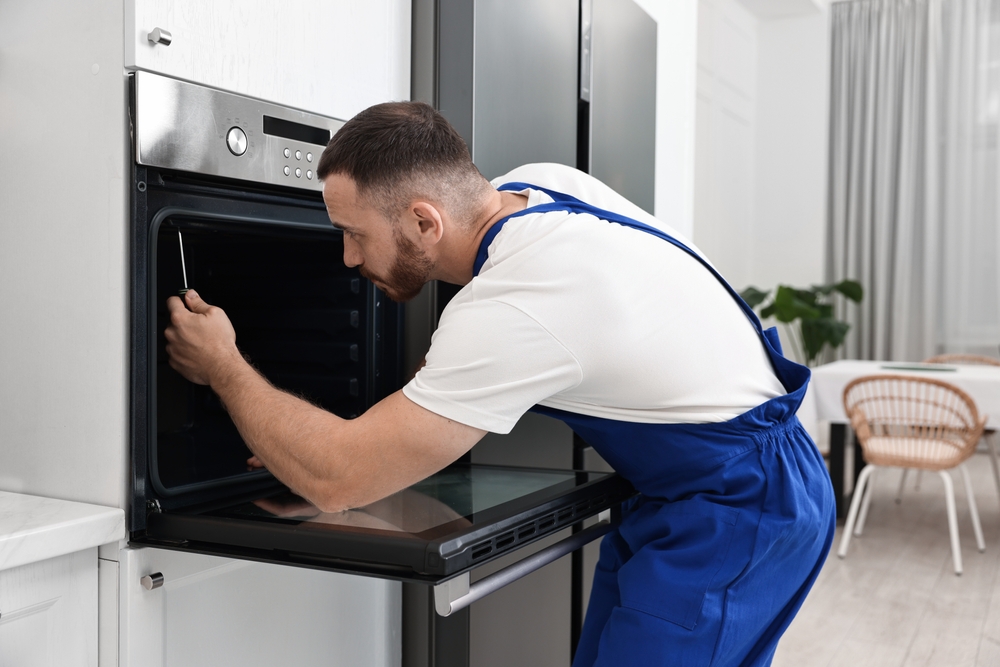
Quick & Pro Appliance Repair provides oven repair Glendale cooks trust when a bake element dies or the temperature drifts off target. An oven that runs hot, cold, or uneven ruins recipes and wastes energy. Most oven faults come from elements, sensors, door seals, or control boards that have aged. This guide covers the signs, the causes, and the right time to book help in Glendale, California.
Oven Repair Glendale: Signs Your Oven Needs Attention
A reliable oven holds the temperature you set. When it drifts, your food tells you first. Cakes rise on one side, or a roast browns unevenly across the pan.
Other signs are easier to spot. The oven may take far too long to preheat. It may click off before the timer ends, or it may never reach the set temperature at all.
A door that will not seal is another clue. Heat leaks out, and the oven works harder to keep up. Each symptom points to a part worth checking early.
What Causes Oven Problems
Several parts share the workload inside an oven. A cracked bake or broil element leaves cold spots. A drifting temperature sensor feeds the control board a wrong reading, which leads to an oven that bakes unevenly.
The door matters more than many people expect. A worn door seal lets heat escape and throws off every reading. A tired control board can also cause random shutoffs during a cycle.
Ignition adds one more layer on gas models. A weak igniter delays the flame and slows the preheat. Each of these parts leaves a distinct pattern behind, which helps a technician read the fault quickly and target the right repair the first time.
Our Method for Oven Repair Glendale
Our technicians test the real temperature before touching a part. We place a probe inside and compare it to the setting. That single step separates a sensor fault from an element fault.
Next we inspect the door seal, the hinges, and the wiring. A machine that shows temperature swings often hides more than one worn part. We confirm the cause, then quote only the work you actually need.
Oven Symptom and Solution Table
The chart below connects common oven complaints to their likely source. On-site testing confirms the final diagnosis.
| Symptom | Likely Cause | What We Do |
|---|---|---|
| Uneven baking | Weak element or bad sensor | Test both, replace the faulty part |
| Slow preheat | Failing bake element | Inspect and fit a new element |
| Runs too hot or cold | Drifting sensor or control | Calibrate or replace the sensor |
| Shuts off mid-cycle | Overheating control board | Test circuit, replace the board |
| Heat escapes | Worn door seal | Fit a new gasket, adjust hinges |
Repair or Replace Your Oven
The age and condition of the oven guide this choice. A newer range with one failed element is usually an easy fix. An older unit with a bad board and a worn door may need more extensive work.
We look at the whole picture before we advise you. A single part often restores full service. The U.S. Fire Administration shares practical safety guidance in its home fire prevention resources that every household can use.
Usage habits also shape the decision. An oven that runs daily for a large family wears faster than one used a few times a week. We factor in how you cook so the advice fits your kitchen, not a generic rule. That way you replace a part only when it truly makes sense.
What an Oven Repair Glendale Visit Involves
A clear process removes the guesswork from a failing oven. You call, describe the symptoms, and we set an arrival window around your day. The technician brings testing tools and frequently used parts.
We measure the true cavity temperature and inspect the seal and elements. Then we explain the cause and the honest recommendation before any repair starts. Many sensor and element faults are handled in a single visit.
You also leave with simple prevention advice. We show which habits protect the seal and the electronics. That guidance keeps your oven accurate through many more meals.
We stand behind every repair as well. If the same fault returns, we come back and correct it. That promise is why so many home cooks rely on us for oven repair Glendale service.
Neighborhoods We Serve Near Glendale
Our oven repair Glendale service reaches homes across the wider area, not just the city center. We travel to nearby communities every week and keep the same fast response times. A local team means shorter waits and quicker access to common elements and sensors.
- Eagle Rock and Highland Park
- Echo Park and Silver Lake
- Los Feliz and the nearby foothills
Wherever you bake in the area, you meet the same trained technician and the same honest assessment. That consistency keeps quality high on every call we take.
Maintenance That Extends Oven Life
Simple care keeps an oven accurate for years. Wipe spills once the cavity cools, and inspect the door seal for gaps. Small habits prevent large repairs.
- Clean the interior gently, without harsh scraping near the seal.
- Check the door gasket for cracks a few times a year.
- Use the self-clean cycle sparingly to protect the electronics.
- Avoid slamming the door, which loosens hinges over time.
These steps protect the sensor and the seal, the two parts that guard accuracy. A cared-for oven holds its temperature and your recipes stay reliable.
Book Oven Repair in Glendale
Reach Quick & Pro Appliance Repair in Glendale, California whenever you need a fast, honest assessment. Our team gives a clear quote only after we inspect the appliance, never before you meet a technician.
- Phone: (818) 860-8028
- Address: 450 North Brand Blvd, Office 670, Glendale, CA 91203
- Hours: 7am to 8pm, 7 days a week
Frequently Asked Questions
Why does my oven heat unevenly?
Uneven baking usually comes from a weak bake or broil element, a failing temperature sensor, or a worn door seal. Heat escapes or reads wrong, so one side cooks faster. We test the elements and sensor, then replace the part at fault.
Is it safe to keep using an oven that runs too hot?
An oven that overshoots its setting can burn food and waste energy, and a gas model raises safety concerns. It is best to stop heavy use until a technician checks it. We test the sensor and control to restore accurate temperatures.
Why does my oven shut off during a cycle?
An oven that quits mid-bake often has an overheating control board, a failing sensor, or a tripped safety limit. The unit shuts down to protect itself. A technician traces the circuit and replaces the weak component.
How long should an oven last?
Industry estimates give most home ovens roughly 13 to 15 years with regular care. Heavy self-cleaning cycles and door abuse shorten that range. A well-maintained oven often reaches the upper end.