
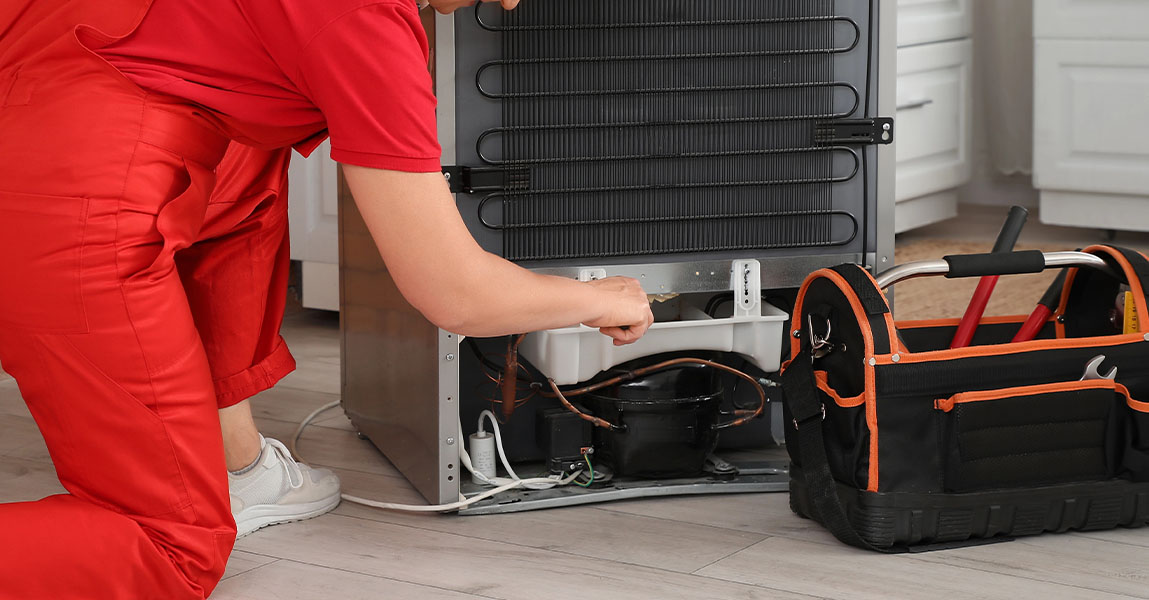
Quick & Pro Appliance Repair Glendale gets frequent fridge repair Glendale calls about refrigerators that cycle strangely. The compressor runs constantly, then goes silent, then kicks back on within minutes. Short cycling like this is not just background noise. It signals that a component inside the fridge is struggling to keep the compressor working properly. This guide explains why refrigerators cycle on and off too often. It covers the parts usually responsible and how our technicians track down the real cause.
What Short Cycling Actually Means
A healthy refrigerator compressor runs in fairly long, steady stretches. It then rests once the interior reaches the target temperature. Short cycling happens when the compressor starts, stops, and restarts every few minutes instead. This pattern puts extra strain on the compressor and can shorten its working life.
Homeowners often notice this pattern through sound alone. A fridge that used to hum quietly suddenly clicks and restarts every few minutes. That change in rhythm is usually the clearest early sign something is wrong.
Fridge Repair Glendale: The Parts Behind Frequent Cycling
Several components can cause a refrigerator to cycle too often. Each one produces a slightly different pattern of symptoms. A failing start relay often causes an audible click without the compressor actually starting. A dirty condenser fan or blocked airflow forces the compressor to work harder and shut off sooner.
The thermostat and temperature sensor also play a role. Inconsistent readings from these parts confuse the control board about when to start and stop the compressor. In older units, a weakening capacitor can produce a similar result. It no longer provides the initial power boost the compressor motor needs.
| Symptom | Likely Cause | What We Do |
|---|---|---|
| Compressor clicks but does not start | Failing start relay or capacitor | Test relay and capacitor, replace faulty components |
| Fridge runs constantly without resting | Dirty condenser coils or blocked airflow | Clean coils, clear vents, check condenser fan |
| Temperature swings between too warm and too cold | Faulty thermostat or sensor | Test sensor readings, replace thermostat if needed |
| Frequent short bursts of running | Worn compressor or refrigerant issue | Diagnose compressor performance, check refrigerant charge |
| Loud humming before shutoff | Fan motor wear or debris in fan blades | Inspect and clean or replace fan motor |
How Glendale’s Warm Months Add Extra Strain
Summer heat pushes refrigerator compressors harder than most homeowners realize. A kitchen that runs warmer during the day forces the compressor to cycle more often just to hold a steady interior temperature. That added workload can expose a weak relay or a marginal capacitor that otherwise might have lasted another season.
Homes with a refrigerator near a window, an oven, or a sunny wall face even more strain. Ambient heat around the unit adds to the load the compressor already has to manage. We see a noticeable rise in short-cycling calls once outdoor temperatures climb, which is why late summer is a good time to check coil cleanliness and door seals before problems worsen.
Airflow Problems Hiding Behind the Fridge
Condenser coils sit at the back or bottom of most refrigerators. They collect dust, pet hair, and kitchen grease over time. Restricted airflow through those coils forces the compressor to work harder to remove heat. That extra strain often triggers the short-cycling pattern described above. A simple coil cleaning resolves a surprising number of these calls.
Placement matters too. A refrigerator pushed too close to a wall struggles to dissipate heat efficiently. The same is true for units sitting in a warm garage without proper ventilation. We check clearance and airflow paths during every diagnostic visit, since a mechanically sound fridge can still misbehave in a poor location.
Fridge Repair Glendale: When the Compressor Itself Is the Problem
Compressors rarely fail without warning signs building up first. A fridge that runs hot to the touch on the outside cabinet deserves attention. So does one that makes a loud knocking sound or trips the circuit breaker repeatedly. These symptoms call for a professional inspection rather than a wait-and-see approach.
Our technicians measure compressor performance directly. We check current draw, refrigerant pressure, and start-up behavior. This data tells us whether the compressor itself is failing or whether a supporting part is the actual source of the problem. An honest assessment always comes first, and a clear quote follows once the cause is confirmed.
If your refrigerator needs repair, Quick & Pro offers refrigerator repair in Glendale with same-day availability.
Simple Habits That Reduce Cycling Problems
A few maintenance habits keep compressors running the way manufacturers intended. These steps take only a few minutes but can meaningfully reduce strain on the system. Building them into a regular routine, rather than addressing them only after a problem appears, tends to catch small issues before they turn into a failed compressor or a full cooling failure.
Seasonal timing helps too. Checking coils and seals before the warmest months arrive gives a marginal component one less variable working against it. Homeowners who schedule this kind of check each spring often avoid the emergency calls that spike once summer heat settles in.
- Vacuum the condenser coils every few months, especially in homes with pets or a dusty kitchen environment.
- Leave at least a few inches of clearance behind and above the refrigerator for proper airflow.
- Keep the door seals clean and check them for gaps that let warm air seep inside.
- Avoid setting the thermostat colder than necessary, since extreme settings force the compressor to run longer.
The ENERGY STAR refrigerator program outlines how efficient cooling cycles are measured. It offers useful context for homeowners comparing appliance performance over time.
For a broader look at cooling failures, our page on the most common reasons refrigerators stop cooling properly covers additional causes worth ruling out. If unusual sounds are the main concern, our guide to loud fridge noises at night breaks down what different sounds usually mean.
If your refrigerator needs repair, Quick & Pro offers refrigerator repair in Glendale with same-day availability.
Frequently Asked Questions
Is it normal for a refrigerator to turn on and off frequently?
No. A healthy fridge runs in longer, steady cycles. Frequent short bursts usually point to a relay, capacitor, thermostat, or airflow problem.
Can dirty condenser coils really cause cycling problems?
Yes. Blocked coils force the compressor to work harder and shut off sooner to avoid overheating. That produces the short-cycling pattern many homeowners notice.
How often should condenser coils be cleaned?
Most manufacturers recommend cleaning coils every six months. Homes with pets or heavy kitchen use may need it more often.
Does short cycling always mean the compressor is failing?
Not always. A weak start relay or dirty coils cause similar symptoms. A proper diagnostic is the only reliable way to confirm the actual cause.
What happens if short cycling is ignored for too long?
The compressor continues under added strain. This can shorten its lifespan and eventually lead to a complete cooling failure.
Get in Touch
Homeowners across Glendale can reach Quick & Pro Appliance Repair Glendale at (818) 860-8028 or through the contact page. The office is at Office number 670, 450 North Brand Blvd, Glendale, California 91203. The team is available daily from 7:00 am to 8:00 pm, seven days a week.