
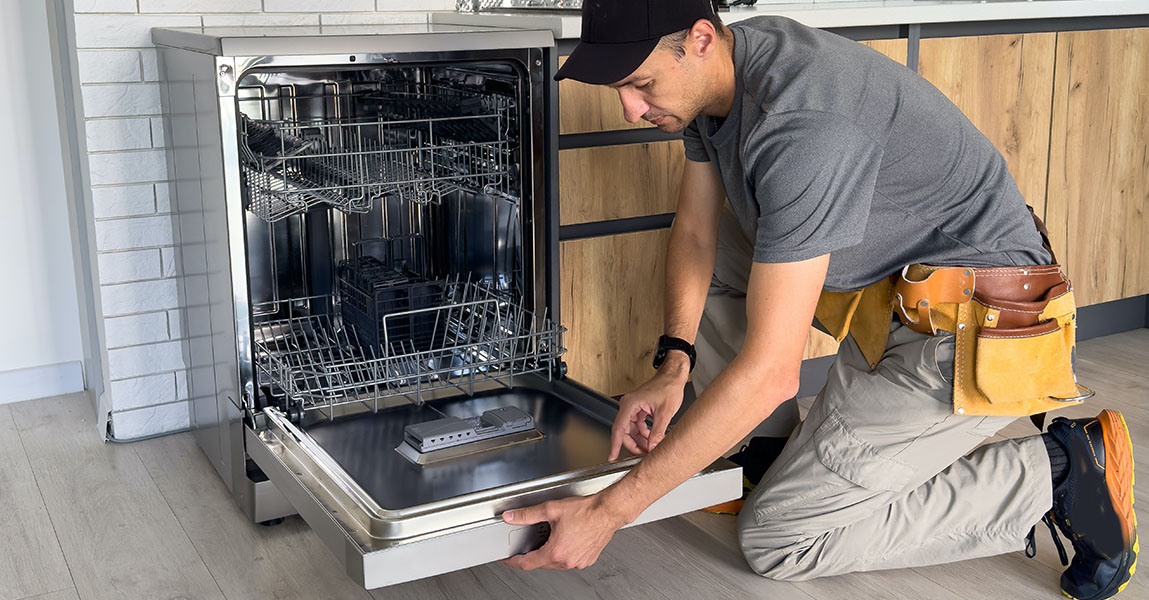
Dishwashers depend on steady pressure to rinse and wash dishes properly. In many Glendale homes, pressure changes often go unnoticed until dishes come out dirty or soap stays behind. We often see dishwashers that work fine mechanically, but still leave food, residue, or cloudy glassware behind. When that happens, water flow is the first thing we check. Let’s look at how pressure connects to performance and how local plumbing habits can make things worse.
Poor Pressure Means Weak Spray Arms
Spray arms spin and spray water across the racks, reaching dishes from all angles. Weak pressure causes those arms to move slower or not spin at all. As a result, food particles stay stuck, and detergent clumps up in corners. Sometimes, we find dishes that look untouched even after a full cycle. That’s because spray holes in the arms don’t push water with enough force to lift and rinse debris.
In Glendale, aging plumbing or shared lines between units can reduce available pressure during high-use times. If someone’s showering or laundry is running, pressure to the kitchen drops. That’s why cycles that start late at night often work better. To fix that, homeowners should first inspect shut-off valves under the sink. If those are half-closed, they choke the flow before water even reaches the appliance.
We often find this issue while doing appliance repair in Glendale. Many calls we get aren’t about broken parts—they’re about poor rinse results caused by pressure issues.
Sediment Blocks Inlet Valves
Dishwashers rely on a water inlet valve to let fresh water in at the start of each cycle. However, local Glendale water tends to carry some sediment. That’s especially true in older neighborhoods with galvanized or aging copper pipes. When sediment builds up in the mesh screen of the valve, the water trickles in too slowly. Even though the cycle runs, the dishwasher doesn’t fill to the right level.
Eventually, the system shortens the rinse cycle or skips a spray altogether. That leaves dried-on food stuck to plates and cutlery. If we remove the screen and flush the valve, pressure often returns to normal right away. In some cases, we recommend a simple inline filter to prevent this problem from coming back.
For homes using well water or those with known hard water spots, annual cleaning of the valve screen can prevent major wash issues. That’s not a hard repair, but most people don’t even know the part exists until dishes start coming out dirty every day.
Clogged Filters Cause Internal Backups
Every dishwasher has one or two internal filters that trap food bits and protect the drain pump. These filters keep debris from recirculating during the rinse, but they also restrict water movement when full. If your pressure starts okay, but then weakens mid-cycle, a dirty filter is often to blame. Once blocked, the appliance cannot reuse or clear the rinse water fast enough.
In Glendale, we often find filters blocked by rice, egg shells, or soap scum. Some machines beep or flash a warning when this happens, but many do not. The result is lower internal pressure that affects not only cleaning but also drying. Water lingers in corners because it wasn’t forcefully sprayed away in the first place.
We always advise checking these filters monthly. If cleaned properly, they help maintain strong, even pressure throughout the cycle. For models with hard-to-reach filters, a flexible brush and vinegar soak can help remove greasy buildup.
Water Supply Line Diameter Makes a Difference
Dishwasher supply lines vary by installation. Some homes use thin, flexible tubing that’s quick to install but restricts flow. Others use copper or braided steel lines that allow more pressure to reach the inlet. In Glendale, we’ve seen many renovations where the dishwasher got connected to a smaller line because it was easier to fit behind cabinetry.
That small change impacts how fast the dishwasher fills. A narrower hose reduces flow, especially during peak usage times. If you hear your dishwasher humming but not spraying early in the cycle, that may be why. Even new machines struggle to perform if the plumbing behind them limits volume.
If cleaning and valve checks don’t help, replacing the supply line with one that’s wider can restore pressure. That’s usually a simple fix but not something most homeowners think to try. It often makes the biggest difference in cases where nothing else seems wrong mechanically.
Shared Water Use in Apartments and Duplexes
In multi-unit homes, water pressure fluctuates based on total demand. If the neighbor starts laundry or the building uses a shared hot water source, your dishwasher pressure can drop mid-cycle. That leads to streaks, dried soap, or food residue even if the appliance runs just fine.
We’ve helped Glendale renters identify pressure dips by running cycles at different times of day. Mornings and evenings often show the worst results due to shared water usage. When we do dishwasher repair in Burbank, many of the same issues show up in nearby units with identical setups.
If pressure drops are frequent, installing a pressure regulator at the sink connection or even switching to a booster pump can help. While those solutions cost more upfront, they offer consistent wash results regardless of building-wide water habits.
Temperature Drops Reduce Pressure Too
Dishwashers perform best with hot water from the start. But if your water heater is far from the kitchen, pressure can drop while the machine waits for hot water to arrive. Cold water enters, pressure slows, and the spray pattern weakens. We’ve found Glendale homes where temperature delays cut pressure enough to impact the entire first rinse.
To fix this, we suggest running hot water at the sink before starting the dishwasher. This simple step clears cold water from the pipes and allows the appliance to start strong. It also prevents detergent from clumping due to temperature imbalance.
Some dishwashers have built-in heaters to offset this, but if your model relies mostly on supply temperature, early pressure losses will always affect wash quality.
Plumbing Noise Can Signal Pressure Trouble
Unusual noises like water hammer, knocking, or pipe rattling often mean unstable pressure. These noises show up more in Glendale homes with older plumbing or recent remodels. If you hear loud bangs after the dishwasher shuts off, it may be due to fast-closing valves that create a pressure surge.
That surge doesn’t just affect your hearing—it also affects how steadily water flows to your appliance. Pressure spikes can confuse internal sensors, cause false fills, or even stop a cycle early. We often diagnose noisy pipe issues when appliances show random errors or incomplete cleaning without any clear mechanical cause.
Pressure stabilizers or hammer arrestors added behind the dishwasher or under the sink can solve this. They absorb the extra force and keep the appliance running smoothly.
City Water Pressure Variability in Glendale
Glendale homes receive water from several sources, and that mix can shift based on season or supply changes. This affects pressure at the tap, especially during dry months or after main repairs. Sudden drops or surges make it hard for dishwashers to regulate spray and rinse cycles.
We recommend checking your pressure with a gauge if dishes seem clean one week and not the next. That can help confirm whether the issue comes from plumbing or the appliance itself. Many problems that seem like appliance failure are actually tied to unpredictable water conditions.
To handle changing conditions, we sometimes recommend dishwashers with stronger pumps or internal heaters. But more often, we simply help homeowners adjust to local patterns and update their setup for better consistency.
When It’s Time to Call for Help
After checking valves, cleaning filters, and adjusting usage times, some dishwashers still leave dishes dirty. That’s when we step in to look deeper at sensor readings, electrical function, and pressure delivery over time. We often find subtle issues with the inlet system or sensors misreading water levels due to earlier pressure drops.
For anyone unsure where the problem starts, a quick visit from a technician can rule out appliance defects and focus on plumbing or installation instead. Whether it’s a small fix or a full diagnosis, we help homeowners avoid guessing and wasting time replacing parts that still work.
If your dishwasher seems fine but cleaning has slowly declined, reach out to us through Contact Us. We’ll check pressure, flow, and fill timing to get things working right again.
FAQ
Why are my dishes still dirty even after using rinse aid and high heat?
If water pressure is low, spray arms can’t reach all surfaces. Rinse aid and heat help drying, but they can’t replace strong rinsing.
How can I test if my water pressure is too low for my dishwasher?
Use a simple gauge at your kitchen tap. Ideal pressure should be between 40 and 60 psi. Anything below 30 can affect cleaning.
What happens if the inlet valve is blocked?
A blocked valve limits water entry. Your dishwasher may run but won’t fill correctly. That causes poor rinsing and leftover debris.
Is it safe to clean dishwasher filters on my own?
Yes. Most filters twist or lift out easily. Rinse under warm water and scrub gently with a soft brush to remove grease and buildup.
Does hot water affect pressure?
It can. Long pipe runs or slow heaters cause delays, leading to pressure drops when cold water flows in first. Running the tap first helps.