
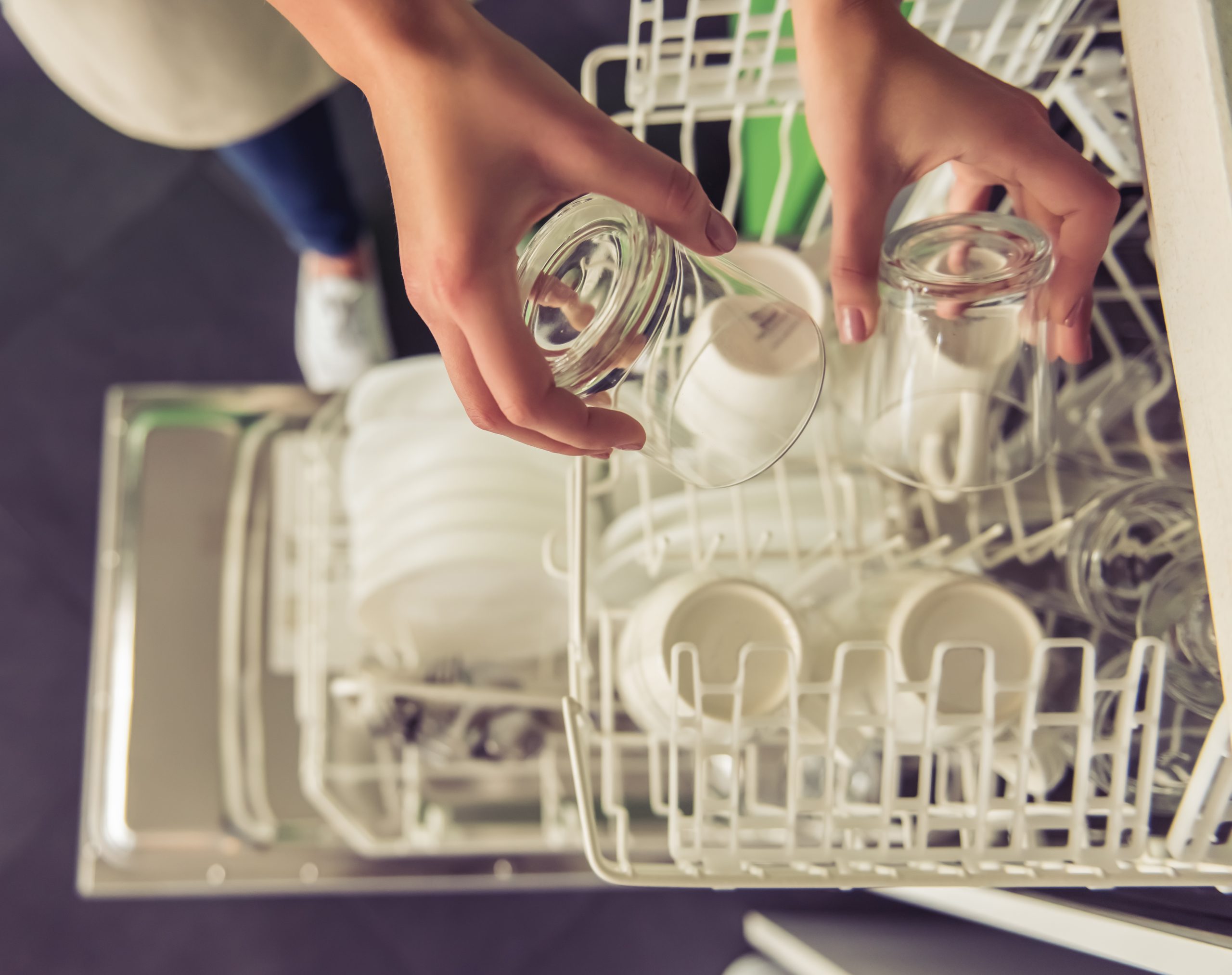
If you run a clean cycle and notice a dishwasher clean cycle smell getting stronger, it feels backward. However, that happens when the cycle loosens old buildup but does not fully flush it away. At Quick & Pro Appliance Repair, we see this most often in homes where the dishwasher looks clean on the inside, but hidden areas still hold greasy water and food particles. Therefore, the machine finishes “cleaning” while the trapped gunk starts warming up again, and the odor returns fast.
Many homeowners search online for quick fixes, and some of them help. But, if the smell comes back after one or two cycles, the problem is usually in the filter area, the drain path, or the rubber seals. For ongoing help with appliance repair services, it helps to understand what is really happening during that “clean” program.
How a clean cycle can make odor stronger
A clean cycle is designed to heat water and loosen residue. Consequently, it can break up grease sheets on the tub walls, soften detergent scum, and lift food paste from corners. That is to say, it acts like a reset button only if the dishwasher can drain completely and rinse those particles out.
If the dishwasher drains slowly, the loosened residue settles into the sump and filter area instead. Moreover, the next time the unit sits closed overnight, that warm, damp mix becomes a smell trap. In addition, some clean cycles use less water than people expect, so a restricted drain can keep “dirty clean cycle water” in the bottom even when the program finishes.
The hidden spots that hold the worst buildup
Most odors start in places you rarely see. For example, the screen filter can hold a thin layer of grease that looks harmless but smells strong when heated. The lower spray arm hub can also collect soft food, and a partially blocked spray arm will not rinse the bottom well. Similarly, the rubber door gasket can store slime in the folds, especially near the bottom corners.
If the odor spikes right after the clean cycle, it often means the cycle stirred these areas. After that, the residue dries slowly and leaves a stronger “stale dishwasher” smell when you open the door.
Drain problems that keep dirty water inside
A dishwasher should drain fast and fully. However, a kinked drain hose, a dirty air gap, or a clogged garbage disposal connection can slow the flow. As a result, leftover water stays in the sump and turns sour, even if the inside walls look shiny.
One easy clue is the smell type. If it is swampy or sour, think standing water. If it is greasy, think filter and sump buildup. In other words, the odor usually points to the system that is failing.
When drainage problems persist, professional dishwasher repair in Burbank can identify whether the issue is a blockage, a weak drain pump, or an installation problem that causes backflow.
Backflow: the smell that returns overnight
Backflow happens when water from the sink plumbing returns into the dishwasher. Therefore, you might notice the dishwasher smells fine after a cycle, but it stinks the next morning. Common causes include a missing high loop in the drain hose or a failing check valve. To clarify, the unit is not creating new odor; it is receiving it from the plumbing line.
Detergent, rinse aid, and “too much of a good thing”
Using more detergent does not mean a cleaner wash. On the other hand, excess detergent can create a waxy film that traps food odors. Low-quality pods can also leave undissolved gel in the dispenser area, and that residue warms up during a clean cycle and smells unpleasant.
Rinse aid helps drying, but overfilling it can leave a slick coating. Consequently, grease sticks more easily, and the filter area becomes a sticky smell source. If your dishes feel cloudy or the tub feels slippery, the dosing may be off.
What you can do at home to stop the smell
Start with the filter and the seal. Firstly, remove the lower rack and take out the filter screen, then wash it with hot water and a soft brush. Secondly, wipe the door gasket folds with warm soapy water, especially along the bottom edge. After that, check the drain area for labels, glass, or food pieces that block the sump.
Next, run a hot cycle with the dishwasher empty. But, do not skip the manual cleaning step, because the cycle cannot remove thick grease mats by itself. If you still get a dishwasher clean cycle smell within a day or two, the drain line or pump system likely needs deeper service.
If odors seem tied to other kitchen appliances or you are dealing with multiple issues at once, it can be helpful to address related systems like fridge repair in Burbank or cooking appliances such as stove repair in Burbank and cooktop repair in Burbank, because kitchen airflow and grease habits often overlap.
When it’s time to call a technician
If the smell is strong, returns quickly, or comes with poor draining, do not keep running clean cycles hoping it will fade. Therefore, a proper inspection should include the filter housing, sump, drain pump performance, check valve operation, and hose routing. Quick & Pro Appliance Repair handles these problems by cleaning the areas a homeowner cannot safely access and confirming the dishwasher drains and refills correctly.
A repeat dishwasher clean cycle smell is usually a sign of trapped residue plus a draining issue. In conclusion, fixing the cause stops the odor for good, instead of masking it for a day.
FAQs
Why does my dishwasher smell like rotten eggs after a clean cycle?
That smell is often linked to trapped food residue or standing water warming up after the cycle. However, it can also happen when plumbing gases backflow into the unit through the drain hose.
Should I use vinegar or baking soda to remove dishwasher odor?
They can help with light odors. For example, vinegar can reduce film and baking soda can freshen, but they will not solve a clogged filter, weak drain pump, or backflow issue.
How often should I clean the dishwasher filter?
Most importantly, check it weekly if you run the dishwasher daily. Otherwise, cleaning it every two to four weeks is a solid routine for preventing odor and poor washing.
Why is there water left in the bottom after the cycle ends?
A small amount can be normal near the sump. But, pooled water usually means a partial blockage, a hose routing problem, or a drain pump that is not pushing water out strongly.
Can a dirty spray arm cause bad smells?
Yes. Consequently, if spray arm holes clog, the dishwasher cannot rinse the bottom well, and residue stays in the sump area where odors grow.